
Lessons in leadership from Japan #3
I thought I understood influence. That was before I moved to Japan and learned about Nemawashi.
I had built my career on being clear, efficient, and able to move things forward quickly.
If something make sense, you explain it well, you convince people, and things move forward. Simple, efficient.
That was how I knew I was doing my job well.
But then Japan changed this. A meeting goes quiet. A project takes longer than anticipated. An implementation unfolds in ways that do not match the patterns we have learned to rely on… You realize the timeline you had in your head… doesn’t apply anymore.
The hardest part is not about understanding others. It is realizing how easily we can misread what is happening to us.
Then making the wrong assumption.
And taking the wrong action.

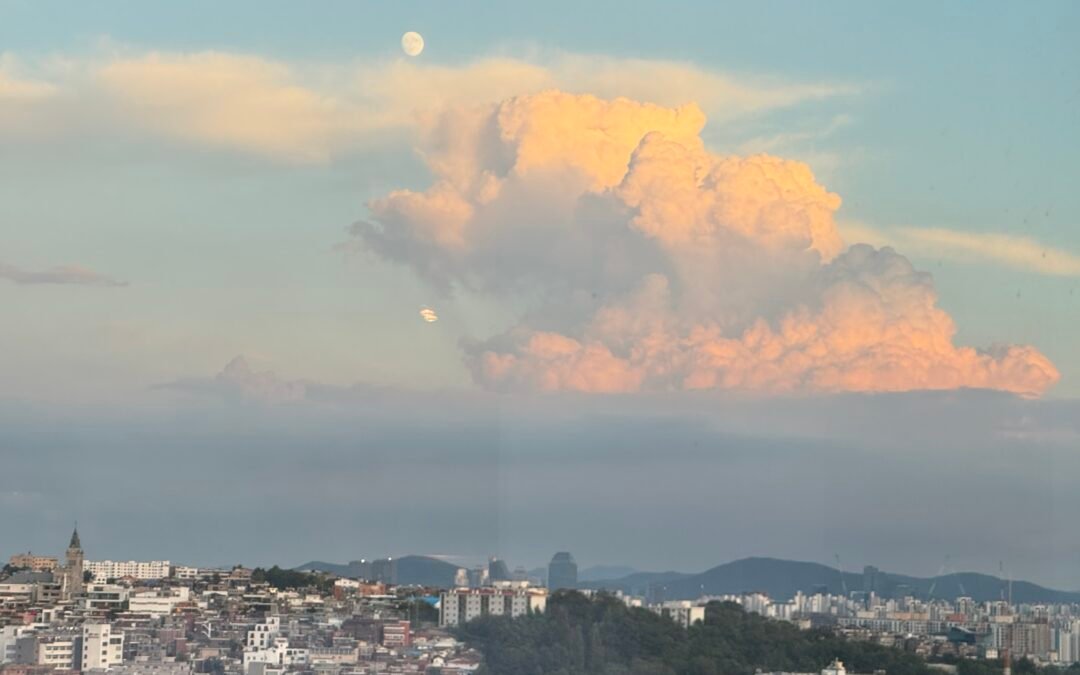
Photo credits : tiennguyen on Pexels
I had been brought to Japan to lead a complex project: migrating eight different payroll systems — spread across plants and offices all around the country — into one single integrated platform hosted in the cloud.
On paper, it was straightforward. In reality, it wasn’t.
Like in France, payroll is a complex system and a sensitive topic in Japan.
The HR managers I needed to work with were not keen on opening their books. They were worried about confidentiality. They were afraid we would use the project as an excuse to simplify or streamline the hundreds of specific allowances and manual calculations their pay rules had accumulated over decades. These rules reflected years of company history. They were not just technical specifications — they were part of the identity of each site, each team.
The Art of Not Moving Forward…
Initially, the plan was to gather everything within a couple of weeks before a full team blue-print meeting. This was what worked in other places. Not in Japan.
It took much longer. Almost six weeks instead of 2.
Instead of moving forward as planned, I found myself traveling across the country, sitting down with each HR manager individually, going through their data together, answering questions, explaining, reassuring.
I told them about my background. About the French payroll system, which is notoriously complex and full of peculiar rules of its own. I wanted them to see that I was not there to judge their methods or simplify what they had spent years building. I was there to understand, analyse, not to judge. And slowly, carefully, they started to trust me.
After each long day of work, we would go to a nomikai — an after-work gathering over food and drinks, an informal space that exists in Japanese culture precisely for this purpose: to let people be human beings before they are colleagues. Those evenings were not a reward at the end of the working day. They were part of the work itself.
I remember one evening, after two rounds of beer, one of the HR managers looked at me with a kind of quiet appreciation and said: “Bénédicto-san, o sake tsuyoi ne.” It means: you stand alcohol well. My first instinct was to laugh. My second was to realise he was not joking. It was, in its way, a compliment — the kind that doesn’t travel well across cultures but lands with complete clarity when you are sitting in the right room. I had stayed. I had drunk. I had not retreated into professional distance when the day was over. That, apparently, meant something.
At the time, it felt like we were not moving with the project. The stakeholders on the call were concerned.
It felt slow.
Pressure from sponsors went up. But the real pressure was not coming from them.
What I remember most from those weeks is the feeling of being alone with a problem I couldn’t name. The team was there. The sponsors were there. But I couldn’t explain to any of them what I was sensing — that something important was happening beneath the surface of the project, that the usual levers weren’t working, that what was needed was something I didn’t yet know how to do. When you can’t name what’s wrong, you can’t ask for help. You just carry it. I started questioning things I had never questioned before: whether I was the right person for this project, whether my experience actually translated, whether the confidence I had brought with me to Japan was something I had earned or something I had simply never had reason to test.
If you’ve been there, you don’t forget this feeling. Leaders who have worked in another country will recognise it immediately: moments like this don’t just happen once — they come back, again and again, and each time they carry that same disorienting sense of being lost in translation.
Because nothing in your usual way of reading a situation tells you that this is progress. So you start to wonder if you’re getting it wrong.
The work before the work
Looking back, that phase (or process) had a name. Nemawashi : preparing the ground before the decision.
Not presenting a finished idea and asking for approval, but going to people one by one, sharing the intent, listening to their concerns, allowing the idea to evolve before it becomes official.
I experienced it as a detour and a delay.
Why not reach out to everyone virtually, present the plan, align, and move forward? But that logic assumes that alignment happens in the meeting. In my japanese context, the blueprint meeting that we were preparing was the final and visible part.
The real work needed to happen before. Away from the office meeting room.sitting with people instead of working through them.
What changed for me
Those weeks felt long. Longer than planned. Longer than comfortable.
I was anxious. I slept poorly.
There was a moment — I couldn’t tell you exactly when — where I stopped trying to perform and started admitting, at least to myself, that I didn’t know what this situation required of me. And then I did something I hadn’t thought to do before: I reached for a different lens. I had always been fascinated by Japanese culture — its codes, its rituals, the way meaning moves through gesture and silence rather than words. I told myself: this is the moment to lean into that curiosity. Not as a leader trying to fix a stalled project. As someone genuinely trying to understand a world that works differently from my own. That shift — from expert to observer — was small. But it changed what I was able to see.
And then, once trust was there, everything accelerated.
Questions were answered quickly. People engaged. They supported. Because they were already part of it. They had not only been convinced, they had contributed. They felt involved, it was their project as well.
What changed was not only my understanding of Japan. It was my understanding of influence.
Influence is not only about the quality of the idea.
It is about the path the idea takes through people. And that path is rarely linear.
What Slow Trust Built
By the time I had completed my tour across Japan, I had spent weeks in nomikai, in small offices, in factory canteens, listening more than talking. The data collection phase had taken three times longer than planned. My sponsors were patient, but there was pressure.
Later I realised the investment in every extra week was worthwhile.
The testing phase — usually the most painful part of any system migration, the part where problems surface and teams start pushing back — went remarkably fast. Every time a question came up, the HR managers I had met during my tour responded quickly and openly. They had seen how I worked. They knew their data was safe. They trusted that I understood what mattered to them. So when I needed their help, they gave it without hesitation.
The project ended up being completed on time. The slow beginning had made the execution faster, not slower.
The lesson learned about Leadership and Influence
Ten years later, I received a message I didn’t expect.
One of the HR managers I had met during that tour — someone who had been among the most cautious, the most protective of his data at the start — wrote to me when he retired. A long, personal message. He said how much he had valued working with me, how much the project had meant to him. It was one of the most touching professional messages I have ever received, and it came from someone who, in those early weeks, had barely wanted to open his books to me.
That message is the proof that slow trust builds something that fast results never could.
That message arrived five years after the project ended. But it described something that had been decided in those first slow weeks — in the factory canteens, in the nomikai, in the moments when I chose to stay rather than retreat.
It also made me realise something I had not fully understood at the time: that what I thought was a project about payroll systems was actually a project about people. The data was the surface. Underneath it were histories, identities, fears, and loyalties that no blueprint meeting could have surfaced. What made the project work was not the quality of the technical solution. It was the fact that people felt seen before they were asked to deliver.
That is what nemawashi taught me — and it changed permanently how I see leadership and influence
I stopped measuring progress by what was visible. I started paying attention to what was moving beneath the surface: the conversations that hadn’t happened yet, the people who hadn’t been asked yet, the concerns that were present in the room but not yet spoken. I became slower, more deliberate, more curious about what I was missing than certain about what I knew.
Before Japan, I would ask: are we moving fast enough? After Japan, I ask something else first: are the right people already part of this — before we move at all? Japan gave me that question. I haven’t stopped asking it.
I write about Japan, but these stories are really about perspective. After fifteen years living there, I realised that the country’s greatest gift wasn’t teaching me how people in Japan live, work and lead—it was revealing the assumptions I carried with me. Through these journeys, I hope to invite readers to become travelers too: a little more curious, a little less certain, and a little more open to the many ways of the world.
After all, the most meaningful journeys don’t just change what we see. They change us and how we see.
Bénédicte / The Great Floating Tribe