
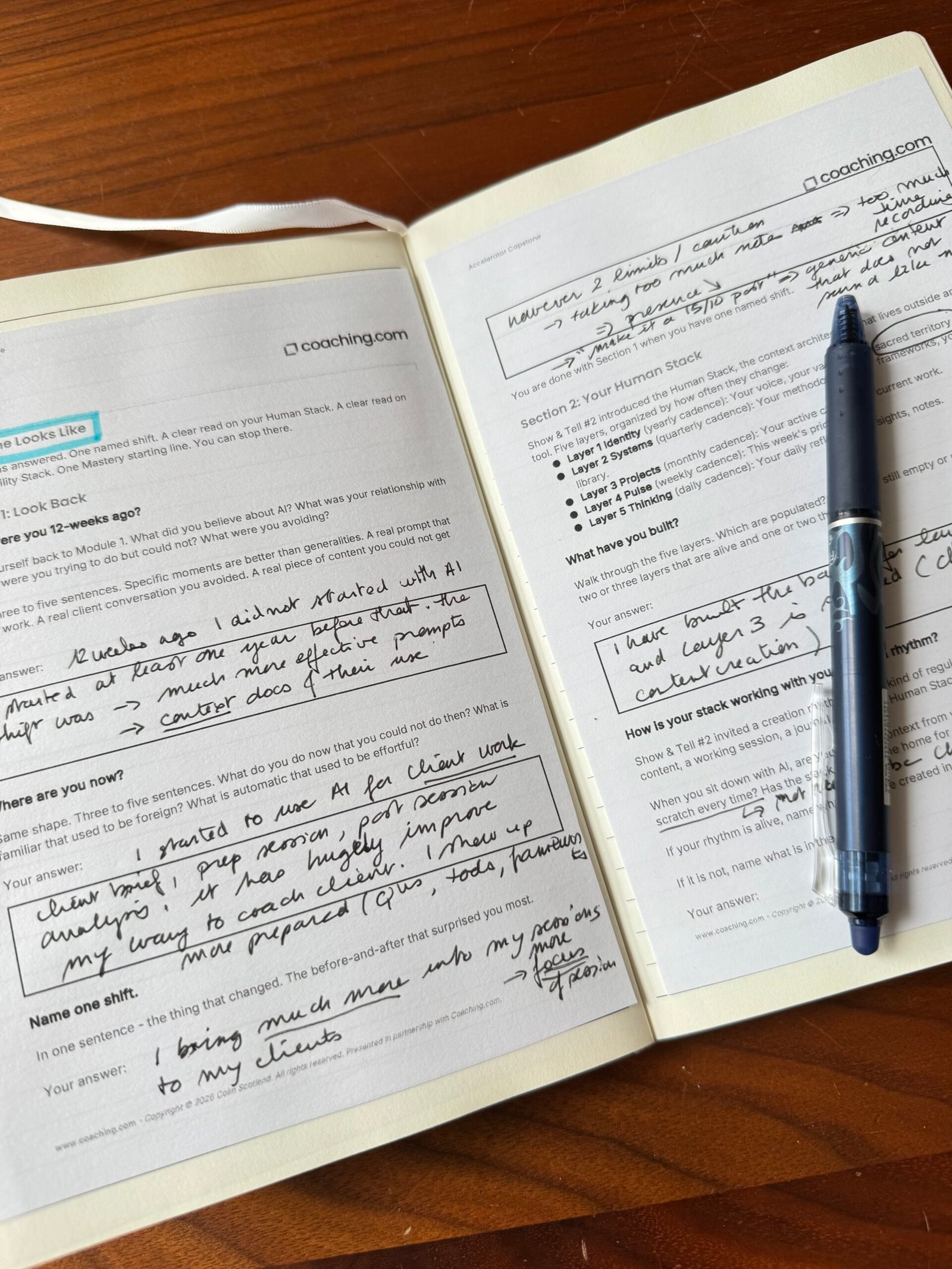
Two years ago, I started experimenting with generative AI out of curiosity.
This year, it became part of my writing practice.
Not because I wanted AI to write for me, but because I discovered it could really help me find and amplify my own voice.
So from now on, you’ll find this short note at the end of my articles:
“This article was originally written by my own brain with the help of my finger-tips, then reviewed and improved with the help of a generative AI tool. It was then reviewed again and edited by me, to ensure that it is reflecting my personal voice, point of view and opinion.”
Partly, this is to comply with the evolving guidelines around AI in Korea.
But mostly, it’s because I believe transparency matters.
The conversation around AI often assumes there are only two options: either you write everything yourself, or the machine writes it for you. My experience has been far less dramatic—and much more interesting.
You’ve seen it over and over, especially here on LinkedIn. Used poorly, AI produces content that feels “strange”, both generic and empty. It usually starts with “Three years ago, I learned an important lesson…”, includes a life-changing airport conversation that probably never happened, and ends with “Agree?” It’s polished. It’s confident. Yet you finish reading it with a strange feeling. As if something was missing.
I don’t think AI is the problem here. It’s about how we use it.
At the beginning of this year, I joined the Coaching in the Age of AI programme. It turned out to be about much more than technology. It’s about how we, as coaches, can continue to grow, adapt and stay relevant in a world that is changing incredibly fast.
AI is helping me understand better what feels like my voice… and what doesn’t. Each time it suggests a sentence that doesn’t feel like me, I become a little more aware of what does. The words I naturally choose. The humour I enjoy. The emotional clarity that I experience and want to share with the reader.
The final article is usually more me, not less.
Apparently, AI had to be coached before it could coach my writing.
At some point, after one too many rewrites, I finally got it.
“OK, Bénédicte. I understand now. You’re not asking me to improve your writing.”
“For months, every time you asked me to make it ’15 out of 10′, I did exactly what I had been trained to do. I made it punchier. More dramatic. More inspirational. More ‘LinkedIn’. And every time, I moved it a little further away from your voice.”
“Now I know that’s not the job.”
“My job isn’t to make you sound like everyone else. It’s to help you sound more like yourself. I’m not trying to rewrite the music anymore. I’m just adjusting the frequencies until it sounds like you.”
I’ve come to think of AI as an amplifier. It doesn’t create the observations, the questions or the lived experiences that shape my work. It amplifies what I bring into the conversation.
AI hasn’t lived my life. It hasn’t moved between countries, tried a peppermint Americano just because everyone else seemed to be drinking one, wandered through unfamiliar neighbourhoods, or sat quietly wondering why two people can walk out of the same meeting with completely different interpretations.
One thing I’ve also learned is that working with AI is not a destination. It’s not something you master once and for all. As these tools evolve, learning how to use them well will remain a work in progress. And that’s what I love. Continuous improvement has always been part of how I work—whether I’m coaching, writing, or trying to better understand human behaviour.
There is much more I could say about how I use AI, particularly around ethics and confidentiality. Protecting my clients’ privacy is a non-negotiable part of my practice, but this is not the place to go into it.
If you’re also exploring how to integrate AI into your work, I’d be genuinely interested to hear about your practice, the questions you’re exploring, and the ethical choices you’re making along the way. Feel free to reach out in the comments or by direct message.
#genAI #Aicoaching #writingwithAI #greatfloatingtribe
“This article was originally written by my own brain with the help of my finger-tips, then reviewed and improved with the help of a generative AI tool. It was then reviewed again and edited by me, to ensure that it is reflecting my personal voice, point of view and opinion.”
Bénédicte / The Great Floating Tribe