
One year ago, I left Paris and moved to Korea.
I was prepared. But no-one prepares you for the second year after your move.
The first year is visible: new country, new perspectives, new energy.
People expect the adjustment. They prepare for and expect a few bumps, those of the well-documented “Culture Shock”, but that’s it. Once you went through the 4 phases, you’re settled.
But one year after a relocation, most people ask a simple question:
“Is this working?”
It sounds reasonable.
But it’s the wrong question.
I remember the energy of those last weeks with surprising clarity. There was, of course, a form of sadness—the closing of a chapter that had been shorter than expected—but what dominated was anticipation. I was energized, almost impatient to begin. I organized farewell gatherings, handled the logistics, and, like many before a move, I tried to prepare myself to “hit the ground running.”
But beyond the administrative noise, I was preparing something else. I was preparing the experience I imagined I would have.
I had plans. I would meet new people quickly. I would immerse myself in the culture, understand the history, explore the nuances of daily life. I would reshape parts of my work, rethink my positioning, open new directions. I approached the move with curiosity and intention, asking myself questions that felt both serious and necessary: What will I learn here? How will this experience shape me? What do I need to put in place to make it successful?
At the time, these questions felt sufficient.
They rarely are.

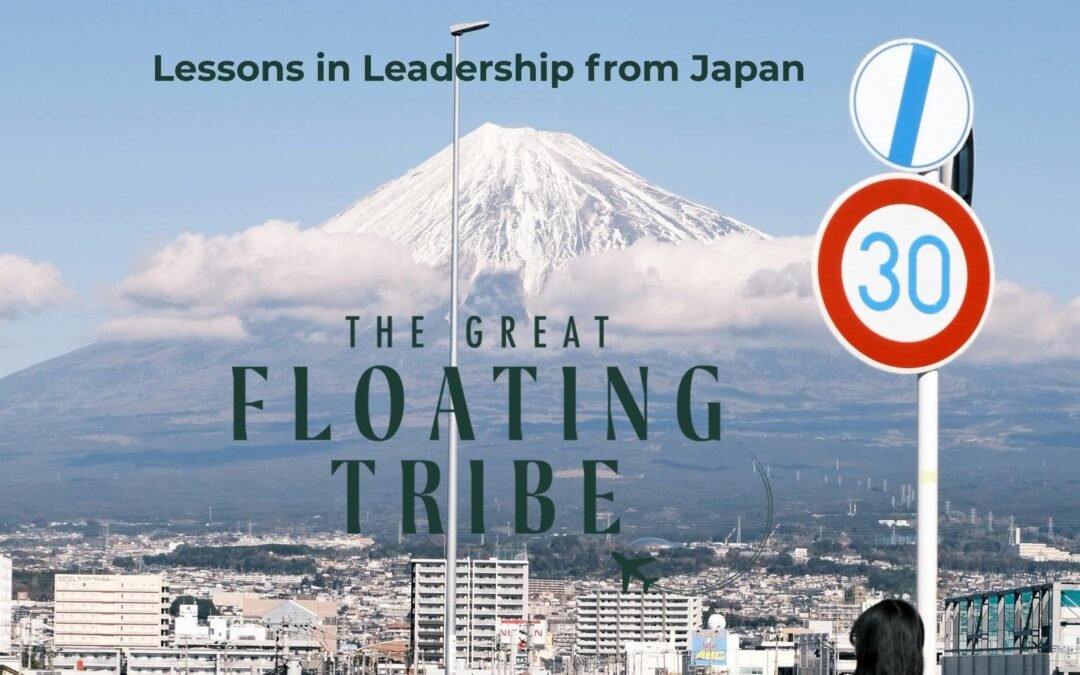
photo credits: Vantrang Ho on Pexels
The Shift Around the One-Year Mark
One year in, the picture looks different.
Not dramatically so. From the outside, everything appears to function. Life is organized. Work continues. A routine has taken shape. And yet, internally, something has shifted.
The one-year mark often brings a form of disorientation that is difficult to name. It is not the initial shock of arrival, nor is it the comfort of having settled in. It is something in between.
You begin to realize that you do not fully belong here yet. At the same time, you no longer belong there either.
This in-between space is rarely discussed, yet it is one of the most defining phases of the experience.
It is also one of the least comfortable.
When Reality Rewrites the Original Plan
Looking back, the gap between expectation and reality is difficult to ignore.
The implicit promise I had made to myself was simple: this experience will change me for the better. I expected to become more resilient, more open-minded, more adaptable. I imagined gaining fluency—not only in language, but in ways of thinking and relating. I saw this move as an accelerator.
In some ways, this has proven true.
But not in the way I had anticipated.
Some goals had to be adjusted, others quietly abandoned. Not because they lacked value, but because they were too many, too ambitious, or disconnected from the actual conditions I encountered. There is, in hindsight, a familiar pattern here—the desire to do everything, to seize every opportunity, to not miss out on what the experience could offer.
Reality tends to intervene.
What remains, however, is not a sense of failure. It is a more grounded appreciation of what has actually been possible, and a quieter form of pride in what has been built, even if it does not match the original plan.
The Discipline of Staying With Discomfort
What has changed most is not what I do, but how I experience the everyday.
There is a form of humility that comes with being out of place for longer than expected. It shows up in small, repeated moments: not understanding a joke, searching for something familiar and not finding it, making mistakes in language or behavior, feeling—again—the outsider in the room.
None of these moments are significant on their own.
But accumulated over time, they reshape your relationship to discomfort.
You begin to notice that the effort is constant. That ease does not come automatically. That belonging cannot be rushed.
And gradually, almost without noticing, something shifts. You stop trying to eliminate the discomfort. You learn to carry it.
Identity Does Not Expand. It Re-configures
It is tempting to describe international experience as “growth,” as if identity simply expands to include new layers. The reality is less linear.
Each place leaves a trace. Not only in what you know, but in how you perceive, react, and relate. These layers do not simply accumulate; they interact, sometimes reinforcing each other, sometimes creating tension.
Over time, you begin to see versions of yourself that would not have existed without these experiences. In my case, even unexpected ones.
In Korea I met the ajumma—and, somehow, she joined my inner cast. Not as a caricature, but as a new posture, a different way of occupying space, of relating to others, of navigating daily life. It is slightly unsettling. It is also strangely liberating. Full of possibilities (however I am not talking about caryying homemade kimchi around or meddling in my kids romantic life!)
There is a particular kind of relief in stepping out of an outdated version of yourself that had, perhaps, become too tight.
Belonging Beyond “Integration”
Over time, a quieter realization has taken shape, one that I had not anticipated when I first arrived: the strongest sense of connection has not necessarily come from integrating locally—at least not yet—but from meeting others who share this peculiar experience of being in-between.
What I recognize as the Great Floating Tribe: it’s not a label I was consciously seeking, yet once it appeared, it became difficult to ignore, as if it had always been there, waiting to be named.
It took a very ordinary evening for that realization to become real.
I was sitting with members of SIWA in Seoul, listening to stories that, on the surface, looked very different. Some had lived in multiple countries, others only in one. Some had returned after years abroad, others had moved more recently. There was no obvious pattern, no shared résumé that could neatly explain why we were sitting around the same table.
And yet, something was immediately familiar.
Many of the Korean members spoke about what it felt like to come back after living abroad—the subtle disorientation, the sense of no longer fitting as naturally as before, the quiet awareness that something in them had shifted in ways that were difficult to name.
It was not about how many countries you had lived in, or how far you had traveled, it was something else : A way of seeing, a way of relating, a way of being slightly out of place—and knowing how to live with it.
That was the moment I recognized it more clearly.
What I have come to call the Great Floating Tribe is not defined by geography, status, or even mobility itself. It is shaped by something less visible: the experience of having lived, not visited, another part of the world, and having allowed that experience to leave a mark—through disconfort, through adaptation, through the slow process of acculturation.
Once you see it, it becomes difficult to unsee.
And perhaps more importantly, it becomes easier to recognize each other.
A year into my new Korean chapter, I recognize more clearly my connection with those women who understand, without much explanation, what it means to build a life while not fully belonging, and who can sit with that tension without feeling the need to resolve it too quickly.
How to Approach Your Second Year Abroad
The one-year mark does not call for a neat conclusion, but for a more honest form of reflection—one that resists the temptation to tidy up the experience into something coherent, and instead lingers on what has actually unfolded: what worked, what did not, what has shifted quietly, sometimes almost imperceptibly.
It invites a different kind of question, one that is less concerned with whether expectations and goals have been met, and more attentive to what this experience is now asking in return.
Because the second year does not simply extend the first. It asks for a different posture—one that relies less on projection and more on presence, less on trying to “make it work” and more on understanding what is already there, less on certainty and more on the ability to stay with what is still unresolved.
And perhaps this is the part we rarely name.
What we called adaptation, integration, or even success in the first year is only a beginning—necessary, but incomplete. Something quieter, less visible, and far less controllable starts to take shape after that.
Not everyone stays long enough to reach that second posture.
So the question is no longer whether if you achieved your goals, if your expectations were met, or if this experience is working.
It is whether you are willing to remain long enough to let it change you more deeply.
Bénédicte / The Great Floating Tribe