Why take the direct way when there is a longer way?
Lessons in Leadership from Japan #2
We were supposed to kick off our new project. Instead, we spent three days visiting factories, eating regional food and driving through rice fields.
Every morning I assumed today’s meeting would finally be about the work, and every evening I returned to my hotel wondering whether I had misunderstood the purpose of the trip. It never occurred to me that everyone else except me understood it perfectly.
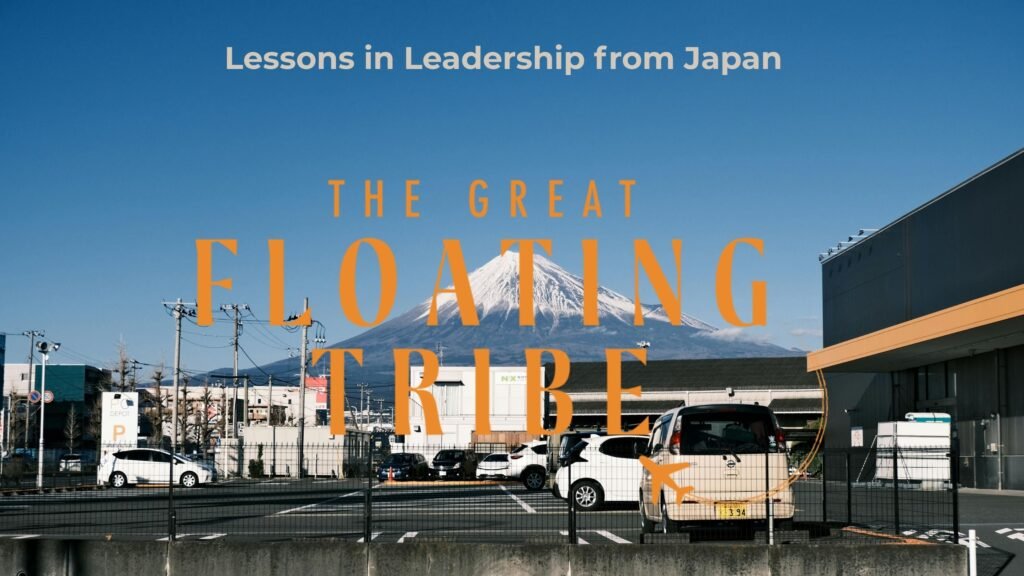
On the first day, I assumed we were simply easing into things. On the second day, I became impatient. Surely tomorrow we would stop admiring production lines, tasting regional food and talking about the history of the area, and finally open our laptops to discuss timelines, responsibilities and deliverables.
By the third day, my attention shifted. Instead of wondering when the project would begin, I started wondering what everyone else seemed to understand that I didn’t. Since I could no longer make sense of the situation through my usual way of working, I did the only thing left to do: I let go, stopped trying to drive the experience and started observing it.
Almost without noticing, I became an anthropologist. I began collecting clues. Nobody checked their watch. People remembered the names of each other’s children. The project itself appeared only briefly in conversation, almost as an afterthought, yet everyone seemed quietly engaged in assessing something I couldn’t yet see.
The more carefully I watched, the less certain I became. Back home, I knew exactly how to contribute. I asked good questions, summarised discussions and helped groups move towards decisions. Here, none of those instincts seemed particularly useful, and the part of me that quietly measured my worth by being competent began to feel strangely out of place.
That discomfort surprised me. It wasn’t simply that I didn’t understand the language or the customs; it was that I no longer understood what counted as being effective here.
Even greeting people became a small moment of hesitation. I would begin to bow, notice someone extending a hand, pause for a fraction of a second and realise I no longer knew which set of rules I was supposed to follow.
So I spoke less than usual and paid closer attention. Outside the meeting rooms, conversations drifted naturally towards families, careers, childhood memories and favourite local restaurants. We laughed at my hesitant Japanese, and I slowly realised that I could connect with people who, on paper, seemed to have very little in common with me.
They were older, Japanese, and deeply rooted in a world I barely understood. Yet beneath those obvious differences, I kept recognizing something familiar: a deep sense of responsibility, pride in doing good work and genuine curiosity about other people. We came from different worlds, but we cared about remarkably similar things.
Only much later did I realise what had been happening during those three days. I had assumed we were postponing the “real work”, when in fact we were already doing it. The project was waiting because something more important was quietly being built first.
Looking back, I don’t think Japan changed my understanding of Japanese culture nearly as much as it changed my understanding of leadership. I had always believed that trust grows out of working well together. What I experienced there suggested the opposite: sometimes trust is what makes good work possible in the first place.
Whenever I begin working with a new team now, I still notice the same old instinct rising in me. I want to get to the agenda, demonstrate that I am useful, I can add value and move the conversation forward. Then I remember those long drives through the rice fields, when for days I thought that nothing important was happening.
Somewhere along those winding roads, I realised that the things which last the longest are rarely built in the fastest way.
Looking back, I can’t remember much about the project itself. I remember the people, the shared meals and the long drives through the rice fields. I thought we were taking the long way around. Years later, those are the only parts of the journey I still carry with me.
I write about Japan, but these stories are really about perspective. After fifteen years living there, I realised that the country’s greatest gift wasn’t teaching me how people in Japan live, work and lead—it was revealing the assumptions I carried with me. Through these journeys, I hope to invite readers to become travellers too: a little more curious, a little less certain, and a little more open to the many ways of the world.
After all, the most meaningful journeys don’t just change what we see. They change how we see.
Bénédicte / The Great Floating Tribe